
What is happening with UBS? Understand the capital debate, Swiss deposit protection and your options for switching banks or opening a second account.
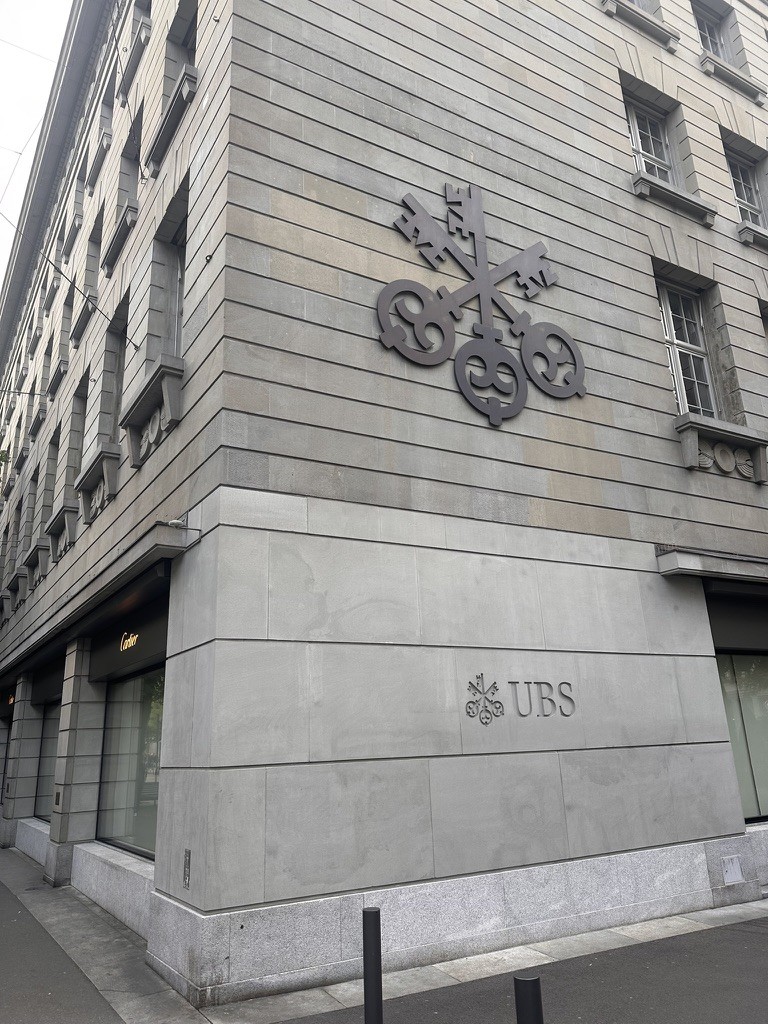
When your bank makes headlines, it stops being financial news. It becomes personal.
Your savings. Your company’s cash. Your investment portfolio.
“Is my money safe at UBS?” is an understandable question. But before deciding whether to stay, switch banks or open a second account, it helps to separate the headlines from what has actually been announced.
Information reviewed on 28 September 2026.
What is happening with UBS—and why is it in the news?
On 23 September 2026, Switzerland’s Council of States supported a proposal requiring 90% core equity capital backing for the Swiss parent bank’s investments in foreign subsidiaries. The parliamentary process is continuing: this is not yet final legislation. [1]
The Federal Council had proposed 100% backing, supported by FINMA. Its stated objective is to address weaknesses exposed by Credit Suisse and reduce risks to taxpayers. UBS considers the proposed tightening excessive. [1, 2]
Did UBS lose USD 33 billion?
No—the USD 33 billion in UBS’s 23 September statement refers to estimated additional capital requirements since the Credit Suisse acquisition, not reported losses.
UBS’s calculation combines approximately USD 16 billion from the foreign-subsidiary proposal, USD 2 billion from separate regulatory measures and USD 15 billion under existing rules.
It is not an entirely new requirement, and the proposed legislation is not yet final. [1]
Is UBS in trouble—and is my money at risk?
The capital announcement concerns regulatory requirements, not a reported inability to repay clients.
In its second-quarter 2026 results, UBS reported USD 2.8 billion in net profit and a Group core equity capital ratio of 14.4%. It also said Credit Suisse integration remained on track for completion by year-end. [3]
Those results do not guarantee future safety. Equally, a disputed capital requirement is not, by itself, evidence of an immediate liquidity crisis.
For account holders, the practical question is how their money is held and protected.
How much money is protected in a UBS account?
Cash deposits and custody investments are not protected in the same way.
- Eligible cash deposits at Swiss branches benefit from Swiss depositor protection up to CHF 100,000 per client, per bank—not per account. Amounts above that do not receive the same enhanced protection. [4]
- Client-owned custody assets, such as shares and fund units, are segregated from the bank’s bankruptcy estate and returned to clients. This protects ownership, not investment performance. [4]
Check the legal entity and country holding your account. Do not assume that Swiss protection rules apply to every UBS account worldwide.
Should I move my money from UBS?
The capital headline alone cannot answer that personal question.
Review your cash above protection limits, access to essential funds, investment holdings and the practical costs of changing banks. An additional banking relationship is also an option to assess—it does not necessarily mean closing your UBS account.
The objective should be a banking arrangement that fits your needs, not a reaction to an alarming headline.
Thinking of switching banks in Switzerland?
Whether you are considering alternatives to UBS or opening a second Swiss bank account, Alpine Capital can help you navigate the process.
Our specialists support private clients, entrepreneurs and companies with Swiss bank account opening and banking coordination. We help assess your requirements, identify suitable banking options, prepare documentation and coordinate the application.
Tell us whether you need a private or business account, your country of residence and what you would like to change about your current banking arrangements.
Account opening remains subject to the chosen bank’s assessment and approval.
General information, not personalised investment or legal advice.